
Palmetto Bluff vs Crane Island: Two Visions of the Lowcountry Life
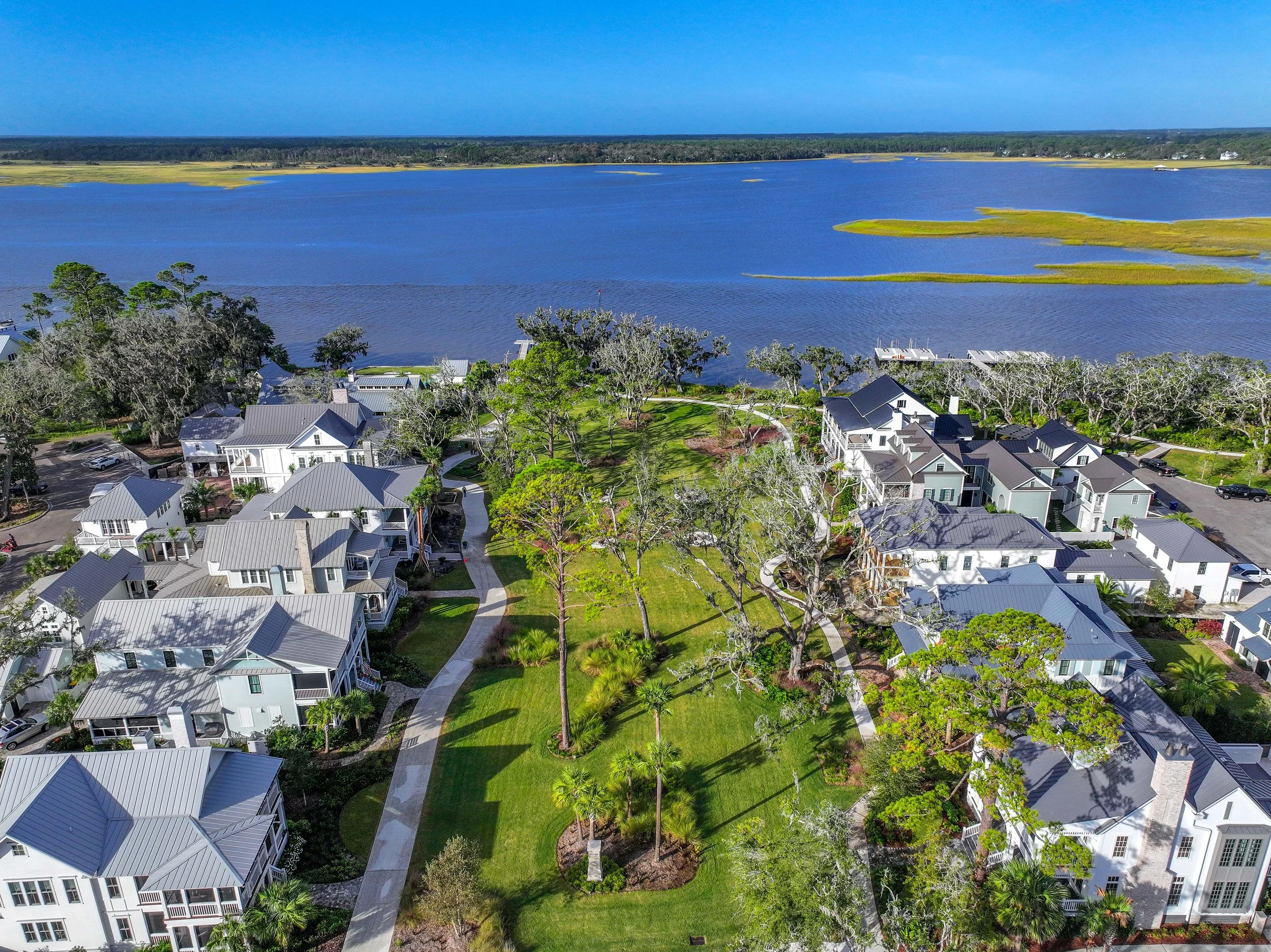
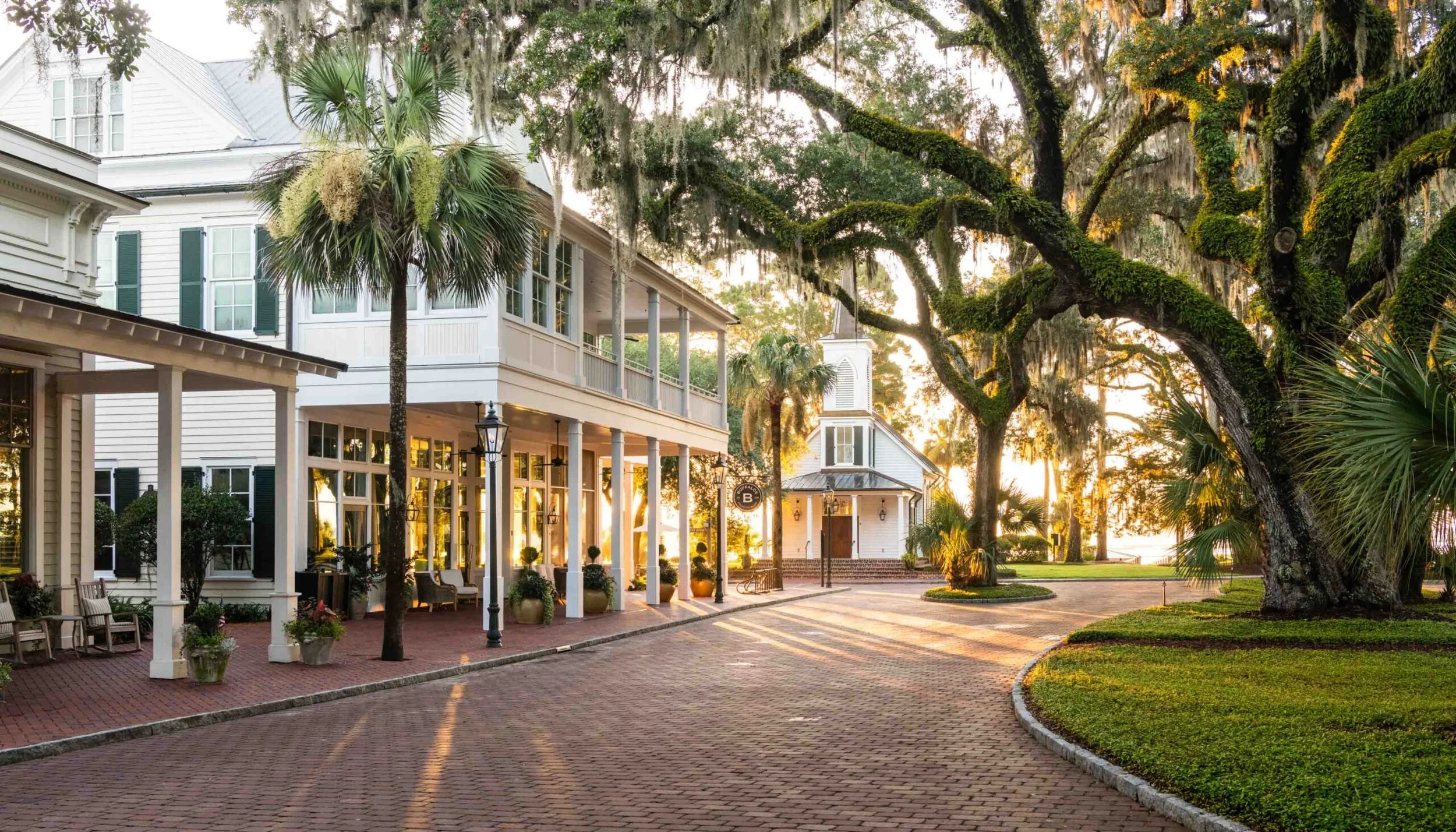
If you've been researching luxury communities along the Southeast coast, two names keep surfacing: Palmetto Bluff in Bluffton, South Carolina, and Crane Island on Amelia Island, Florida. On the surface, they share a lot. Both are gated. Both are architecturally serious, rooted in the Lowcountry vernacular of wide porches, tabby accents, and homes that look like they grew from the land rather than were placed on it. Both communities treat land stewardship as a founding principle, not a marketing tagline.
But spend more time with each, and a clear fork in the road emerges. One is a destination. The other is a neighborhood. Which one fits your life depends entirely on what you're actually looking for.
The honest framing: This isn't a "winner takes all" comparison. Both communities are exceptional. The question is which version of exceptional matches how you want to live.
A Shared Foundation: Land, Architecture, and the Lowcountry Ethos
Start here, because this is where both communities earn their credibility.
Palmetto Bluff and Crane Island were both conceived with a conviction that the land itself is the asset, and that development should serve the landscape rather than consume it. That's rarer than it sounds in luxury real estate, where "waterfront" often means maximum density squeezed up to the water's edge.
The Conservation Commitment
Palmetto Bluff sits on a remarkable 20,000-acre canvas in the South Carolina Lowcountry, and roughly 13,000 of those acres are permanently conserved. The community's land conservancy manages forests, wetlands, and river corridors that make the setting feel genuinely wild, even as a full resort infrastructure operates within it. Residents and guests share access to miles of trails, navigable waterways, and ecosystems that most communities would have long since traded for additional homesites.
Crane Island takes a different but equally intentional approach. The 185-acre site on Amelia Island's western edge preserves approximately 100 acres of the property, protecting the majority of its mature maritime forest. That forest isn't decorative. It creates a living canopy over the community, filters the salt air coming off the Intracoastal, and provides habitat for the birds that give the island its name. The remaining development footprint, 112 homesites total, is deliberately contained.
The Architectural Language
Both communities speak the same architectural dialect, just with different accents.
Palmetto Bluff draws from the formal Lowcountry tradition: elevated homes with deep wraparound porches, board-and-batten siding, metal roofs, and the kind of craftsmanship that references the antebellum plantation aesthetic without recreating it literally. The community's design standards are rigorous, and the result is a cohesive streetscape that feels like a well-curated coastal village.
Crane Island leans into what architects and residents describe as Old Florida vernacular, a slightly looser, more organic interpretation of the same regional tradition. Think craftsman-era details, natural materials, homes that open toward the marsh and the Intracoastal rather than turning their backs on them. The design review process ensures every home fits the community's visual language, but there's more room for individual expression within that framework.
What they share: A genuine commitment to place-making. Neither community is trying to replicate a resort aesthetic imported from somewhere else. Both are rooted in the specific ecology and history of the Sea Islands region.
Where They Diverge: Scale, Amenities, and the Ownership Experience
This is where the two communities tell genuinely different stories, and where your own priorities will start to make the choice clear.
Palmetto Bluff: The Resort-Club Model
Palmetto Bluff is, by any measure, a world-class amenity platform. The Montage hotel anchors the community and brings with it the full infrastructure of a five-star resort: multiple restaurants, spa services, event programming, and a hospitality staff that keeps the property humming year-round. The private club layer adds golf, tennis, a marina, equestrian facilities, and a social calendar that could fill every weekend.
The tradeoff is one that Palmetto Bluff is transparent about: owners share the community with resort guests. The trails, the restaurants, the common spaces, the marina, all of it operates as a shared environment between residents and Montage visitors. For some buyers, that's a feature. The resort infrastructure means the community is always activated, always staffed, always alive. For others, it introduces a level of transience that feels at odds with the idea of home.
The numbers reflect a mature, high-demand market. In 2025, Palmetto Bluff recorded 143 total property closings worth $322.1 million, with an average resale price of $2.95 million for homes and $1.08 million for homesites. Average home values have increased by more than $850,000 since 2021. In Q1 2026, the average closing price reached approximately $3.5 million at $844 per square foot, with a median of 41 days on market.
Crane Island: The Private Neighborhood Model
Crane Island operates from a fundamentally different premise. With 112 homesites on roughly 100 developed acres, the community is sized to produce something specific: a neighborhood where you know your neighbors.
There are no resort guests. No transient visitors. The people you see on the dock, on the trails, at the community park, are the people who own homes here. That distinction shapes everything about the daily experience. The amenities are intentionally scaled to the community: a deep-water day dock with Intracoastal access, walking and biking paths through the maritime forest, a bird sanctuary, community gardens, and beach access to Amelia Island proper. It's not a short list, but it's a residential list, not a resort list.
The proximity to historic Fernandina Beach adds a layer that Palmetto Bluff's more remote setting doesn't replicate. Walkable restaurants, independent shops, a working waterfront with shrimping boats and charter fishing, and a genuine small-town culture are minutes from the gate. Crane Island residents get the privacy of a gated island community and the texture of a real coastal town.
Category
Palmetto Bluff
Crane Island
Size
20,000 acres
~185 acres (100 conserved)
Homesites
Large-scale, ongoing
112 total, handful remaining
Ownership model
Residents + resort guests
Residents only
Amenities
Full resort + private club
Residential-scale, curated
Setting
Bluffton, SC Lowcountry
Amelia Island, Fernandina Beach, FL
Price range
Avg. ~$3.5M (Q1 2026)
From $3M+ for finished homes
Architectural style
Lowcountry
Lowcountry with hints of Old Florida
The Privacy Question
For a certain buyer, privacy isn't a preference. It's the whole point.
Both communities are gated, and both take security seriously. But "gated" means something different at each. At Palmetto Bluff, the gate controls access to a community that also contains an operating luxury hotel, multiple restaurants open to resort guests, and a robust events calendar that draws visitors throughout the year. The community is designed to be activated and social. That's genuinely wonderful, but it means the population within the gates on any given day is a mix of residents, hotel guests, club members, and event attendees.
At Crane Island, the gate is the gate. There are no hotel guests. No day-trippers. No resort visitors. The community is designed for the people who live there, and that's the entire population. A real estate expert who analyzed both communities put it plainly: Crane Island is easier to position as "a small island neighborhood where you know your neighbors" versus Palmetto Bluff's "luxury destination community with everything on-site."
Neither framing is a criticism. They're just honest descriptions of two different things. The question is which one you're actually buying.
For buyers who want to feel like they're on vacation every day: Palmetto Bluff delivers that at a scale few communities anywhere can match.
For buyers who want to feel like they're home: Crane Island is built around that specific feeling.
Which Community Is Right for You?
Most comparison articles dodge this question. We won't.
Choose Palmetto Bluff if:
You want the deepest amenity stack available in a private community, golf, equestrian, marina, spa, and multiple dining options, all within the gates
You value a resort-level hospitality infrastructure and don't mind sharing it with hotel guests
You want a proven, liquid market with strong appreciation history (home values up more than $850,000 since 2021) and a large inventory of resale options
You're drawn to the South Carolina Lowcountry specifically and want to be embedded in that culture at scale
You want a community that's always buzzing, with programming, events, and a social calendar that requires no effort to fill
Choose Crane Island if:
You want a true residential neighborhood, not a resort you happen to own a home in
Privacy and exclusivity mean the gate keeping strangers out, not just controlling traffic flow
You want a custom home on one of the last available parcels of waterfront land on Amelia Island, with a handful of homesites remaining
The texture of a real coastal town, historic Fernandina Beach with its working waterfront, independent restaurants, and 19th-century downtown, matters as much as the community itself
You want to know your neighbors by name, and for your neighbors to know yours
The intimacy of a 112-home community feels like the right scale for the way you want to live
The bottom line: Palmetto Bluff is one of the finest resort-residential communities in the American South. Crane Island is something rarer: a boutique, fully private neighborhood on one of Florida's most storied barrier islands, nearly complete, with only a handful of homesites left to build.
They're not competing for the same buyer. They're competing for different visions of the same good life.
Explore Crane Island
With 90 homes completed and only a handful of homesites remaining, Crane Island is in its final chapter of development. Once those last parcels are built, the community closes, and the maritime forest takes over as the permanent backdrop for the neighborhood it became.
If the boutique, private model resonates with you, now is the time to look. Explore available homesites at Crane Island and see what's left on Amelia Island's western edge.