
Crane Island vs. Spring Island: Two Visions of Conservation-First Lowcountry Living
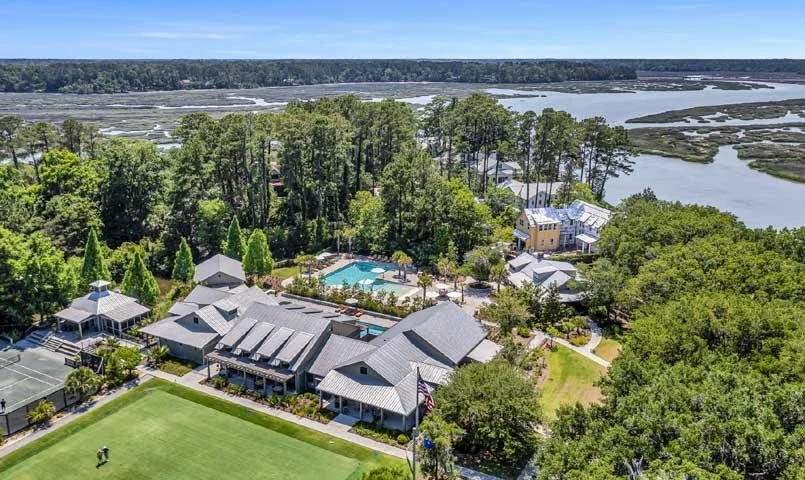
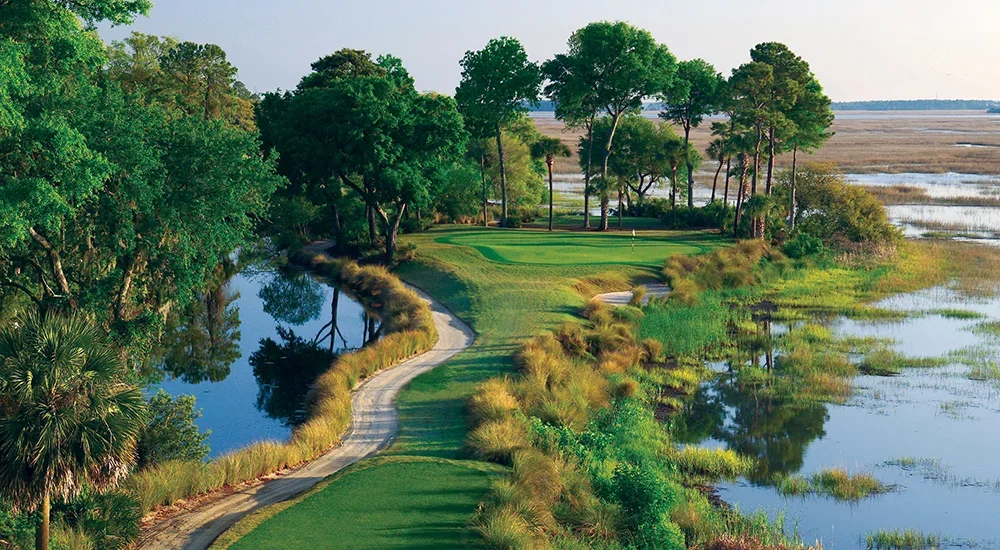
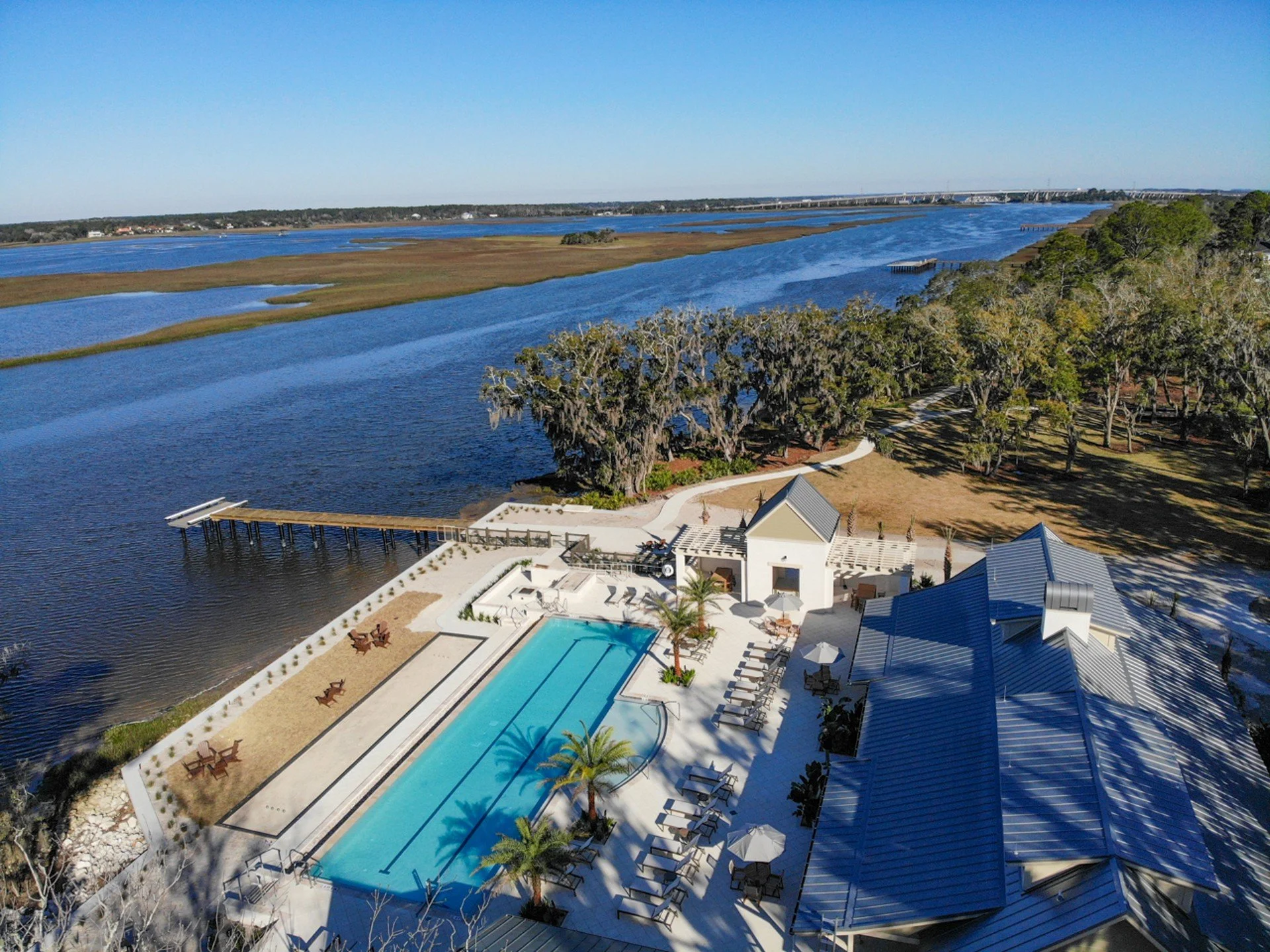
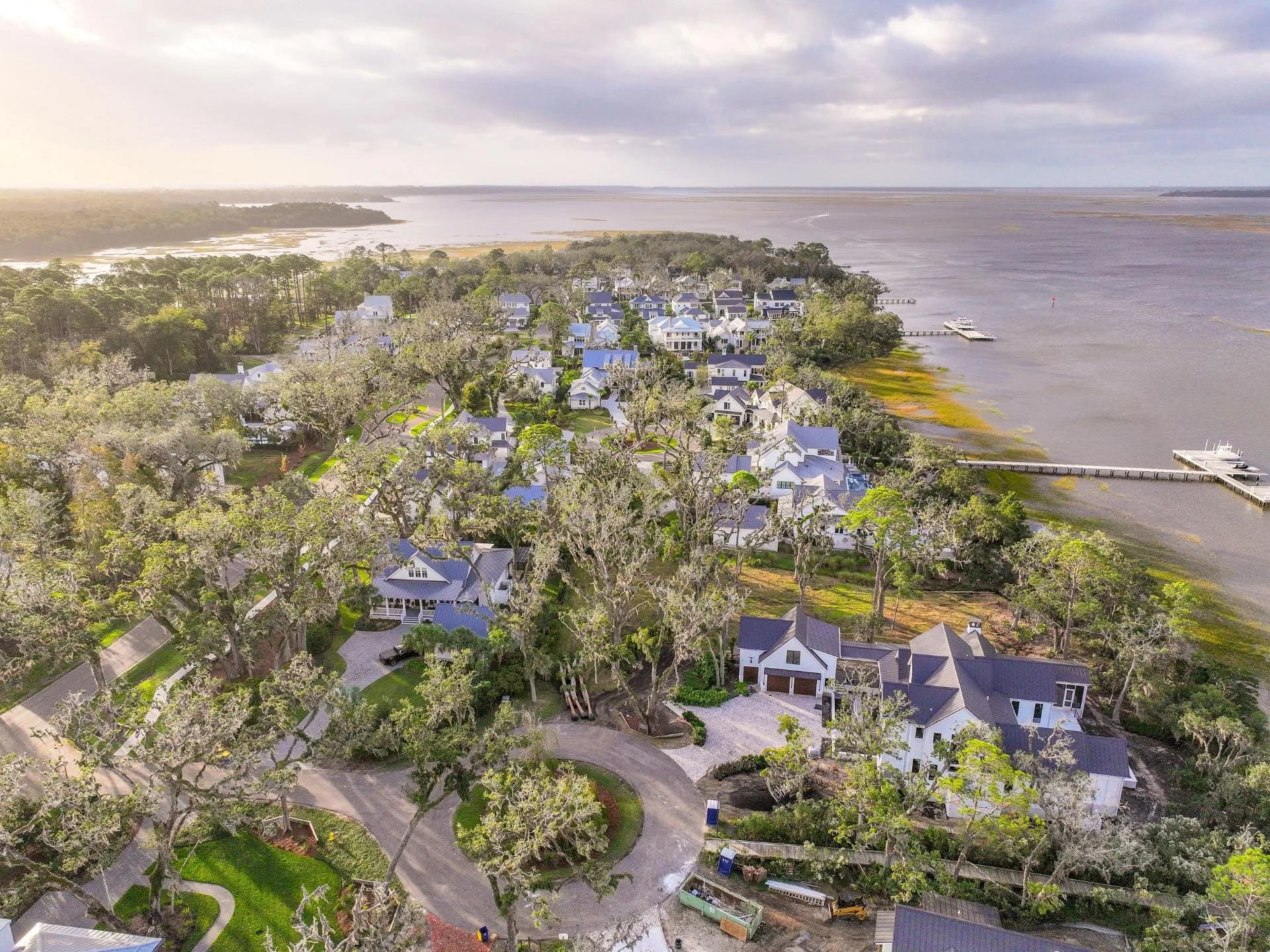
There is a particular kind of buyer who finds themselves drawn to two communities at once. Not because they cannot decide, but because they recognize something rare in both: a genuine, uncompromising commitment to the land. If you have spent time exploring Crane Island on Amelia Island and Spring Island in the South Carolina Lowcountry, you already know that feeling.
Both communities were built around a simple but radical idea: that the most valuable thing a developer can do is leave most of the land alone. Both honor the architectural traditions of the Lowcountry, where deep porches, metal roofs, and the patient wisdom of ancient live oaks define what a home should look and feel like. And both attract a specific kind of resident, one who measures quality of life not in square footage, but in the quality of a morning walk, the depth of a neighbor's conversation, and the sound of marsh birds at dusk.
But shared values do not mean identical experiences. The differences between Crane Island and Spring Island are real, and understanding them is what will tell you which one is truly home.
The core question is this: Do you want the intimacy of a tightly knit coastal village, steps from a thriving historic town? Or do you want the expansive solitude of a great Southern sea island, where the outside world feels genuinely far away?
A Shared Foundation: Conservation as a Way of Life
The easiest way to tell a truly conservation-minded community from one that merely uses the word is to look at the numbers, and the intentions behind them.
At Spring Island, the commitment is codified through an independent nonprofit: The Spring Island Trust, which is charged with protecting more than 1,100 acres of nature preserves in perpetuity. Universities and scientific institutions conduct active fieldwork on the island. The Trust extends its mission beyond Spring Island's gates into the broader Lowcountry, making conservation not just a community amenity but a civic responsibility. Of the island's 3,000 acres, only 400 homes are thoughtfully placed across the landscape. That ratio of people to land is extraordinary.
At Crane Island, the philosophy is equally serious, if expressed at a different scale. Nearly 45% of the island's 185 total acres are permanently reserved as public spaces, protecting the maritime forest, wetlands, and wildlife corridors that define the character of the place. Every home must be sited to maximize tree preservation. Rainwater harvesting, native plant palettes, and low-impact development are not suggestions; they are requirements woven into the community's design guidelines.
What Conservation Looks Like Day to Day
Both communities understand that conservation is not a policy document. It is a lived experience.
At Spring Island, it means your grandchildren can attend Camp Spring Island each summer, spending three days trapping turtles, fishing for sharks, and exploring ecosystems under the guidance of professional naturalists.
At Crane Island, it means your morning walk along the 2.5-mile River to Sea Trail takes you through a preserved maritime forest before delivering you to the edge of the Intracoastal Waterway, where osprey fish and dolphins pass without ceremony.
In both places, the land is not backdrop. It is the point.
Lowcountry Architecture: The Same Language, Different Dialects
If conservation is the soul of both communities, Lowcountry architecture is their shared mother tongue. Ancient live oaks draped in Spanish moss. Homes elevated on crawl space foundations. Deep, welcoming porches that blur the line between inside and out. Gas lanterns casting warm light onto brick paths at dusk. These are not stylistic choices; they are a vernacular shaped over centuries by the coastal climate, the tidal rhythms, and the particular quality of light that falls differently here than anywhere else in America.
Spring Island honors this tradition through its community buildings and architecture, which its own materials describe as "refined yet relaxed," structures that feel like natural extensions of the landscape rather than impositions upon it. The island's philosophy, rooted in the founding vision of Jim and Betsy Chaffin, has always been that architecture should serve the land's character, not compete with it.
Crane Island approaches the same conviction with a more formally codified framework. Working with Historical Concepts, one of the Southeast's most respected architectural firms, the community established four distinct architectural styles: Florida Homestead, Amelia Artisan, Island Contemporary, and New Caribbean. Each draws from the same Lowcountry well, but each expresses it with a slightly different accent, honoring the layered design heritage of coastal communities from Fernandina Beach north to Charleston.
The Hallmarks That Define Both Communities
Across both islands, you will find the same defining elements of authentic Lowcountry design:
Design Element | Why It Matters |
|---|---|
Deep front and rear porches | The social heart of the home; where community actually happens |
Metal roofs | Durable, historically accurate, and beautiful in the coastal light |
Crawl space foundations | Practical coastal wisdom; protection from flooding and humidity |
Haint blue porch ceilings | A beloved regional tradition, as much folklore as design |
Gas lanterns | Warmth and authenticity that no LED fixture can replicate |
Native landscape palettes | Homes that belong to their surroundings, not imposed upon them |
At Crane Island, the guidelines go further, specifying that homes must be sited to capture prevailing sea breezes, preserve the shade of mature live oaks, and enhance long-range views of the marsh and waterway. The result is architecture that is not merely inspired by the Lowcountry, but genuinely of it.
Scale and Amenities: Estate Island vs. Intimate Village
This is where the two communities diverge most meaningfully, and where the right answer depends entirely on who you are.
Spring Island is grand by any measure. At 3,000 acres with only 400 homes, the average density is roughly one home per 7.5 acres. Lots are large, privacy is deep, and the amenity program reflects the scale. Spring Island offers an Arnold Palmer-designed golf course ranked among the top 100 in the country, a full equestrian program with six club horses available to all members, sporting clays, a working farm with 40-plus member volunteers that supplies fresh produce and eggs to the Golf Club each morning, a Nature Center, performing arts programming, lifelong learning initiatives, and access to three saltwater impoundments for fishing. The phrase "if there is an interest, Spring Island will support it" is not marketing language; it is an accurate description of how the community operates.
Crane Island operates at a fundamentally different register. With 113 homesites across 185 acres, it is intimate by design. That intimacy is not a limitation; it is the point. The River House serves as the community's living room, a beautifully appointed gathering space set beneath oak branches with sweeping views of the Intracoastal Waterway, where neighbors meet for sunset yoga, live music, and evenings around the fire pit. Alice Park's 800 feet of Intracoastal frontage provides a day dock, kayak and paddleboard launch, and some of the most spectacular western sunsets on Amelia Island. The 2.5-mile River to Sea Trail connects the community from waterway to ocean. And through an optional membership at the Amelia Island Club, residents gain access to championship golf, beach club amenities, and waterfront dining.
Side-by-Side at a Glance
Crane Island | Spring Island | |
|---|---|---|
Total acreage | 185 acres | 3,000 acres |
Number of homes | 113 homesites | 400 homes |
Density | ~1 home per 1.6 acres | ~1 home per 7.5 acres |
Golf | Optional (Amelia Island Club) | On-site Arnold Palmer course |
Equestrian | No | Yes, 6 club horses |
Farm | No | Yes, 40+ member volunteers |
Waterway access | Direct Intracoastal access | Colleton River, Callawassie Creek |
Conservation | 45% public open space | 1,100-acre Nature Preserve (Trust) |
Architecture standard | Four defined Lowcountry styles | Land-guided, refined and relaxed |
The honest read: Spring Island is for the buyer who wants a full-service, estate-scale island life with extraordinary breadth of experience. Crane Island is for the buyer who wants something rarer: a small, deeply considered community where you actually know your neighbors, and where the amenities are curated rather than comprehensive.
Location and Access: Connected Culture vs. Pure Seclusion
Where a community sits in relation to the world beyond its gates is not a minor detail. It shapes the rhythm of daily life in ways that no amenity list can fully replace.
Spring Island occupies a remote stretch of the South Carolina Lowcountry near Okatie, in Beaufort County. It is a genuine sea island, and that geography is both its greatest gift and its most significant trade-off. Beaufort is the nearest town of real character, a beautiful and historic city, but it sits a meaningful drive away. Hilton Head Island is accessible but hardly around the corner. For residents who have deliberately chosen Spring Island, the distance from the outside world is the point: this is a place of true retreat, where the island itself provides everything you need and the mainland recedes into pleasant irrelevance.
Crane Island's relationship with its surroundings is fundamentally different. The community sits on the western edge of Amelia Island, tucked alongside the Intracoastal Waterway, and it is minutes by car or bike from the heart of historic Fernandina Beach. That matters more than it might sound.
What Fernandina Beach Adds to Crane Island Life
Fernandina Beach is not a generic coastal town. It is one of the most authentically preserved Victorian seaport communities in the American South, with a Centre Street lined by galleries, boutiques, waterfront restaurants, and the kind of unhurried civic life that most coastal towns have long since traded away for development revenue. Farmers markets, live music, independent bookshops, and a working shrimp boat fleet are not nostalgic touches; they are the actual fabric of the place.
For Crane Island residents, this means:
Cultural access without sacrificing privacy. You can spend the morning in the maritime forest and the evening at a waterfront restaurant, without getting in a car for more than ten minutes.
White-sand beaches on Amelia Island's Atlantic side, reachable by bike along the River to Sea Trail.
Jacksonville, a full metropolitan area with international airport access, sits less than 35 miles to the south.
Brunswick and the Golden Isles of Georgia extend the cultural and recreational landscape northward.
Spring Island offers seclusion as a feature. Crane Island offers seclusion and connection, which is a harder thing to build and a rarer thing to find.
Which Community Is Right for You?
Both Crane Island and Spring Island represent the best of what conservation-driven, Lowcountry-inspired development can be. They are peers in philosophy, even as they differ dramatically in expression. Neither is a compromise.
The question is simply one of fit.
Spring Island may be your place if:
You want vast acreage and estate-scale privacy as the defining feature of your daily life
An on-site golf course, equestrian program, and working farm are central to how you envision your days
True seclusion, where the island provides everything and the outside world is genuinely distant, is what you are seeking
You want to be part of a multigenerational conservation legacy with an independent Trust and active scientific research
Crane Island may be your place if:
You want the intimacy of a small, deeply personal community where neighbors become genuine friends
Authentic Lowcountry architecture, codified and consistent, matters as much to you as the land itself
Access to a thriving historic town, white-sand beaches, and a metropolitan airport within a short drive enriches rather than diminishes your sense of retreat
You want to build a custom home, working with acclaimed architectural firms and participating builders, on one of the last remaining homesites in one of the Southeast's most carefully considered communities
With only 14 homesites remaining at Crane Island, the window to build here is genuinely closing. If the idea of a front porch overlooking the Intracoastal, a preserved maritime forest as your backyard, and Fernandina Beach as your front yard speaks to you, we would love to show you what is still available.
Explore available homesites or reach out directly to John Hillman at john@craneisland.com or 843.475.6686. He has been part of this community from the beginning, and there is no one better to walk you through what life here actually looks and feels like.
<h1>Crane Island vs. Spring Island: Two Visions of Conservation-First Lowcountry Living</h1><p>There is a particular kind of buyer who finds themselves drawn to two communities at once. Not because they cannot decide, but because they recognize something rare in both: a genuine, uncompromising commitment to the land. If you have spent time exploring <a target="_blank" rel="noopener noreferrer" class="editor-link" href="https://craneisland.com">Crane Island</a> on Amelia Island and <a target="_blank" rel="noopener noreferrer" class="editor-link" href="https://springisland.com">Spring Island</a> in the South Carolina Lowcountry, you already know that feeling.</p><p>Both communities were built around a simple but radical idea: that the most valuable thing a developer can do is leave most of the land alone. Both honor the architectural traditions of the Lowcountry, where deep porches, metal roofs, and the patient wisdom of ancient live oaks define what a home should look and feel like. And both attract a specific kind of resident, one who measures quality of life not in square footage, but in the quality of a morning walk, the depth of a neighbor's conversation, and the sound of marsh birds at dusk.</p><p>But shared values do not mean identical experiences. The differences between Crane Island and Spring Island are real, and understanding them is what will tell you which one is truly home.</p><p><strong>The core question is this:</strong> Do you want the intimacy of a tightly knit coastal village, steps from a thriving historic town? Or do you want the expansive solitude of a great Southern sea island, where the outside world feels genuinely far away?</p><h2>A Shared Foundation: Conservation as a Way of Life</h2><p>The easiest way to tell a truly conservation-minded community from one that merely uses the word is to look at the numbers, and the intentions behind them.</p><p>At Spring Island, the commitment is codified through an independent nonprofit: <a target="_blank" rel="noopener noreferrer" class="editor-link" href="https://www.springisland.com/nature-the-trust">The Spring Island Trust</a>, which is charged with protecting more than 1,100 acres of nature preserves in perpetuity. Universities and scientific institutions conduct active fieldwork on the island. The Trust extends its mission beyond Spring Island's gates into the broader Lowcountry, making conservation not just a community amenity but a civic responsibility. Of the island's 3,000 acres, only 400 homes are thoughtfully placed across the landscape. That ratio of people to land is extraordinary.</p><p>At Crane Island, the philosophy is equally serious, if expressed at a different scale. Nearly 45% of the island's 185 total acres are permanently reserved as public spaces, protecting the maritime forest, wetlands, and wildlife corridors that define the character of the place. Every home must be sited to maximize tree preservation. Rainwater harvesting, native plant palettes, and low-impact development are not suggestions; they are requirements woven into the community's design guidelines.</p><h3>What Conservation Looks Like Day to Day</h3><p>Both communities understand that conservation is not a policy document. It is a lived experience.</p><ul><li><p>At <strong>Spring Island</strong>, it means your grandchildren can attend Camp Spring Island each summer, spending three days trapping turtles, fishing for sharks, and exploring ecosystems under the guidance of professional naturalists.</p></li><li><p>At <strong>Crane Island</strong>, it means your morning walk along the 2.5-mile River to Sea Trail takes you through a preserved maritime forest before delivering you to the edge of the Intracoastal Waterway, where osprey fish and dolphins pass without ceremony.</p></li></ul><p>In both places, the land is not backdrop. It is the point.</p><h2>Lowcountry Architecture: The Same Language, Different Dialects</h2><p>If conservation is the soul of both communities, Lowcountry architecture is their shared mother tongue. Ancient live oaks draped in Spanish moss. Homes elevated on crawl space foundations. Deep, welcoming porches that blur the line between inside and out. Gas lanterns casting warm light onto brick paths at dusk. These are not stylistic choices; they are a vernacular shaped over centuries by the coastal climate, the tidal rhythms, and the particular quality of light that falls differently here than anywhere else in America.</p><p>Spring Island honors this tradition through its community buildings and architecture, which its own materials describe as "refined yet relaxed," structures that feel like natural extensions of the landscape rather than impositions upon it. The island's philosophy, rooted in the founding vision of Jim and Betsy Chaffin, has always been that architecture should serve the land's character, not compete with it.</p><p>Crane Island approaches the same conviction with a more formally codified framework. Working with <a target="_blank" rel="noopener noreferrer" class="editor-link" href="https://www.historicalconcepts.com">Historical Concepts</a>, one of the Southeast's most respected architectural firms, the community established four distinct architectural styles: Florida Homestead, Amelia Artisan, Island Contemporary, and New Caribbean. Each draws from the same Lowcountry well, but each expresses it with a slightly different accent, honoring the layered design heritage of coastal communities from Fernandina Beach north to Charleston.</p><h3>The Hallmarks That Define Both Communities</h3><p>Across both islands, you will find the same defining elements of authentic Lowcountry design:</p><table class="editor-table" style="min-width: 50px;"><colgroup><col style="min-width: 25px;"><col style="min-width: 25px;"></colgroup><tbody><tr><th colspan="1" rowspan="1"><p>Design Element</p></th><th colspan="1" rowspan="1"><p>Why It Matters</p></th></tr><tr><td colspan="1" rowspan="1"><p>Deep front and rear porches</p></td><td colspan="1" rowspan="1"><p>The social heart of the home; where community actually happens</p></td></tr><tr><td colspan="1" rowspan="1"><p>Metal roofs</p></td><td colspan="1" rowspan="1"><p>Durable, historically accurate, and beautiful in the coastal light</p></td></tr><tr><td colspan="1" rowspan="1"><p>Crawl space foundations</p></td><td colspan="1" rowspan="1"><p>Practical coastal wisdom; protection from flooding and humidity</p></td></tr><tr><td colspan="1" rowspan="1"><p>Haint blue porch ceilings</p></td><td colspan="1" rowspan="1"><p>A beloved regional tradition, as much folklore as design</p></td></tr><tr><td colspan="1" rowspan="1"><p>Gas lanterns</p></td><td colspan="1" rowspan="1"><p>Warmth and authenticity that no LED fixture can replicate</p></td></tr><tr><td colspan="1" rowspan="1"><p>Native landscape palettes</p></td><td colspan="1" rowspan="1"><p>Homes that belong to their surroundings, not imposed upon them</p></td></tr></tbody></table><p>At Crane Island, the guidelines go further, specifying that homes must be sited to capture prevailing sea breezes, preserve the shade of mature live oaks, and enhance long-range views of the marsh and waterway. The result is architecture that is not merely <em>inspired</em> by the Lowcountry, but genuinely <em>of</em> it.</p><h2>Scale and Amenities: Estate Island vs. Intimate Village</h2><p>This is where the two communities diverge most meaningfully, and where the right answer depends entirely on who you are.</p><p>Spring Island is grand by any measure. At 3,000 acres with only 400 homes, the average density is roughly one home per 7.5 acres. Lots are large, privacy is deep, and the amenity program reflects the scale. Spring Island offers an Arnold Palmer-designed golf course ranked among the top 100 in the country, a full equestrian program with six club horses available to all members, sporting clays, a working farm with 40-plus member volunteers that supplies fresh produce and eggs to the Golf Club each morning, a Nature Center, performing arts programming, lifelong learning initiatives, and access to three saltwater impoundments for fishing. The phrase "if there is an interest, Spring Island will support it" is not marketing language; it is an accurate description of how the community operates.</p><p>Crane Island operates at a fundamentally different register. With 113 homesites across 185 acres, it is intimate by design. That intimacy is not a limitation; it is the point. The River House serves as the community's living room, a beautifully appointed gathering space set beneath oak branches with sweeping views of the Intracoastal Waterway, where neighbors meet for sunset yoga, live music, and evenings around the fire pit. Alice Park's 800 feet of Intracoastal frontage provides a day dock, kayak and paddleboard launch, and some of the most spectacular western sunsets on Amelia Island. The 2.5-mile River to Sea Trail connects the community from waterway to ocean. And through an optional membership at the Amelia Island Club, residents gain access to championship golf, beach club amenities, and waterfront dining.</p><h3>Side-by-Side at a Glance</h3><table class="editor-table" style="min-width: 75px;"><colgroup><col style="min-width: 25px;"><col style="min-width: 25px;"><col style="min-width: 25px;"></colgroup><tbody><tr><th colspan="1" rowspan="1"><p></p></th><th colspan="1" rowspan="1"><p><strong>Crane Island</strong></p></th><th colspan="1" rowspan="1"><p><strong>Spring Island</strong></p></th></tr><tr><td colspan="1" rowspan="1"><p>Total acreage</p></td><td colspan="1" rowspan="1"><p>185 acres</p></td><td colspan="1" rowspan="1"><p>3,000 acres</p></td></tr><tr><td colspan="1" rowspan="1"><p>Number of homes</p></td><td colspan="1" rowspan="1"><p>113 homesites</p></td><td colspan="1" rowspan="1"><p>400 homes</p></td></tr><tr><td colspan="1" rowspan="1"><p>Density</p></td><td colspan="1" rowspan="1"><p>~1 home per 1.6 acres</p></td><td colspan="1" rowspan="1"><p>~1 home per 7.5 acres</p></td></tr><tr><td colspan="1" rowspan="1"><p>Golf</p></td><td colspan="1" rowspan="1"><p>Optional (Amelia Island Club)</p></td><td colspan="1" rowspan="1"><p>On-site Arnold Palmer course</p></td></tr><tr><td colspan="1" rowspan="1"><p>Equestrian</p></td><td colspan="1" rowspan="1"><p>No</p></td><td colspan="1" rowspan="1"><p>Yes, 6 club horses</p></td></tr><tr><td colspan="1" rowspan="1"><p>Farm</p></td><td colspan="1" rowspan="1"><p>No</p></td><td colspan="1" rowspan="1"><p>Yes, 40+ member volunteers</p></td></tr><tr><td colspan="1" rowspan="1"><p>Waterway access</p></td><td colspan="1" rowspan="1"><p>Direct Intracoastal access</p></td><td colspan="1" rowspan="1"><p>Colleton River, Callawassie Creek</p></td></tr><tr><td colspan="1" rowspan="1"><p>Conservation</p></td><td colspan="1" rowspan="1"><p>45% public open space</p></td><td colspan="1" rowspan="1"><p>1,100-acre Nature Preserve (Trust)</p></td></tr><tr><td colspan="1" rowspan="1"><p>Architecture standard</p></td><td colspan="1" rowspan="1"><p>Four defined Lowcountry styles</p></td><td colspan="1" rowspan="1"><p>Land-guided, refined and relaxed</p></td></tr></tbody></table><p><strong>The honest read:</strong> Spring Island is for the buyer who wants a full-service, estate-scale island life with extraordinary breadth of experience. Crane Island is for the buyer who wants something rarer: a small, deeply considered community where you actually know your neighbors, and where the amenities are curated rather than comprehensive.</p><h2>Location and Access: Connected Culture vs. Pure Seclusion</h2><p>Where a community sits in relation to the world beyond its gates is not a minor detail. It shapes the rhythm of daily life in ways that no amenity list can fully replace.</p><p>Spring Island occupies a remote stretch of the South Carolina Lowcountry near Okatie, in Beaufort County. It is a genuine sea island, and that geography is both its greatest gift and its most significant trade-off. Beaufort is the nearest town of real character, a beautiful and historic city, but it sits a meaningful drive away. Hilton Head Island is accessible but hardly around the corner. For residents who have deliberately chosen Spring Island, the distance from the outside world is the point: this is a place of true retreat, where the island itself provides everything you need and the mainland recedes into pleasant irrelevance.</p><p>Crane Island's relationship with its surroundings is fundamentally different. The community sits on the western edge of Amelia Island, tucked alongside the Intracoastal Waterway, and it is minutes by car or bike from the heart of historic Fernandina Beach. That matters more than it might sound.</p><h3>What Fernandina Beach Adds to Crane Island Life</h3><p><a target="_blank" rel="noopener noreferrer" class="editor-link" href="https://www.ameliaisland.com/fernandina-beach/">Fernandina Beach</a> is not a generic coastal town. It is one of the most authentically preserved Victorian seaport communities in the American South, with a Centre Street lined by galleries, boutiques, waterfront restaurants, and the kind of unhurried civic life that most coastal towns have long since traded away for development revenue. Farmers markets, live music, independent bookshops, and a working shrimp boat fleet are not nostalgic touches; they are the actual fabric of the place.</p><p>For Crane Island residents, this means:</p><ul><li><p><strong>Cultural access</strong> without sacrificing privacy. You can spend the morning in the maritime forest and the evening at a waterfront restaurant, without getting in a car for more than ten minutes.</p></li><li><p><strong>White-sand beaches</strong> on Amelia Island's Atlantic side, reachable by bike along the River to Sea Trail.</p></li><li><p><strong>Jacksonville</strong>, a full metropolitan area with international airport access, sits less than 35 miles to the south.</p></li><li><p><strong>Brunswick and the Golden Isles</strong> of Georgia extend the cultural and recreational landscape northward.</p></li></ul><p>Spring Island offers seclusion as a feature. Crane Island offers seclusion <em>and</em> connection, which is a harder thing to build and a rarer thing to find.</p><h2>Which Community Is Right for You?</h2><p>Both Crane Island and Spring Island represent the best of what conservation-driven, Lowcountry-inspired development can be. They are peers in philosophy, even as they differ dramatically in expression. Neither is a compromise.</p><p>The question is simply one of fit.</p><p><strong>Spring Island may be your place if:</strong></p><ul><li><p>You want vast acreage and estate-scale privacy as the defining feature of your daily life</p></li><li><p>An on-site golf course, equestrian program, and working farm are central to how you envision your days</p></li><li><p>True seclusion, where the island provides everything and the outside world is genuinely distant, is what you are seeking</p></li><li><p>You want to be part of a multigenerational conservation legacy with an independent Trust and active scientific research</p></li></ul><p><strong>Crane Island may be your place if:</strong></p><ul><li><p>You want the intimacy of a small, deeply personal community where neighbors become genuine friends</p></li><li><p>Authentic Lowcountry architecture, codified and consistent, matters as much to you as the land itself</p></li><li><p>Access to a thriving historic town, white-sand beaches, and a metropolitan airport within a short drive enriches rather than diminishes your sense of retreat</p></li><li><p>You want to build a custom home, working with acclaimed architectural firms and participating builders, on one of the last remaining homesites in one of the Southeast's most carefully considered communities</p></li></ul><p>With only 14 homesites remaining at Crane Island, the window to build here is genuinely closing. If the idea of a front porch overlooking the Intracoastal, a preserved maritime forest as your backyard, and Fernandina Beach as your front yard speaks to you, we would love to show you what is still available.</p><p><a target="_blank" rel="noopener noreferrer" class="editor-link" href="https://craneisland.com/realestate">Explore available homesites</a> or reach out directly to <strong>John Hillman</strong> at <a target="_blank" rel="noopener noreferrer" class="editor-link" href="mailto:john@craneisland.com">john@craneisland.com</a> or <a target="_blank" rel="noopener noreferrer" class="editor-link" href="tel:8434756686">843.475.6686</a>. He has been part of this community from the beginning, and there is no one better to walk you through what life here actually looks and feels like.</p>