
Crane Island vs. Habersham: Two Visions of Lowcountry Living
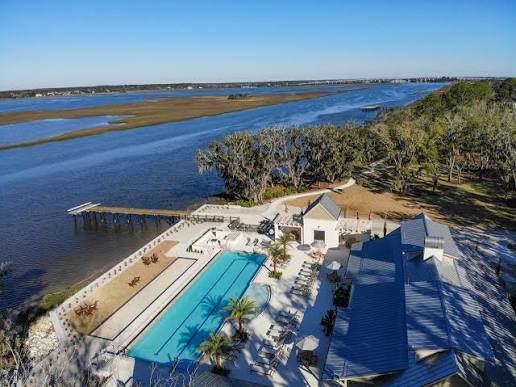
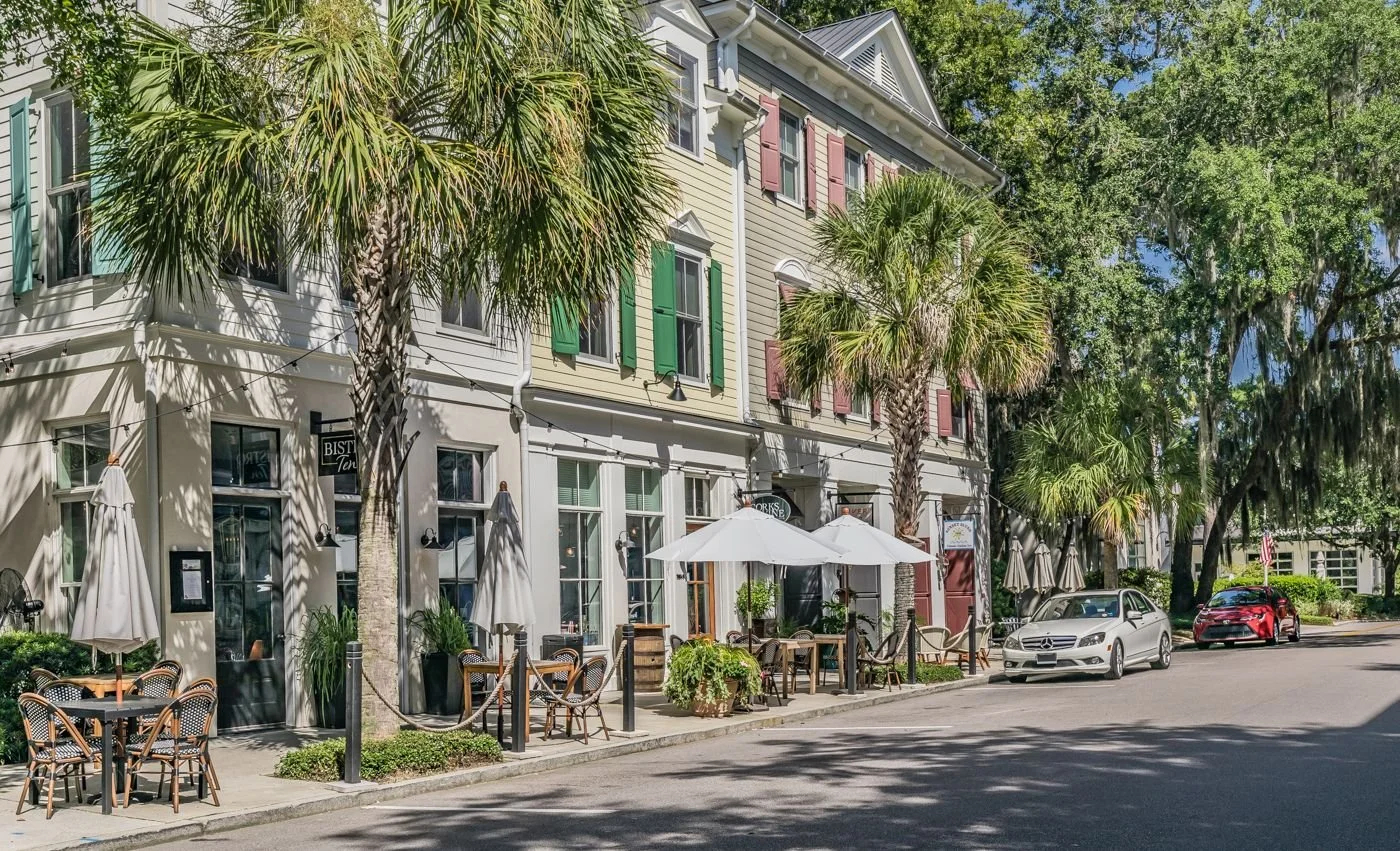
When thoughtful buyers begin exploring Lowcountry-inspired communities, they often encounter a handful of names that consistently rise to the top of the conversation. Habersham, nestled along the Broad River just outside historic Beaufort, South Carolina, is one of them. So is Crane Island, a 185-acre sanctuary alongside Amelia Island on Florida's northeast coast. Both communities share a deep reverence for the Lowcountry vernacular, a commitment to meaningful placemaking, and an understanding that where you live shapes how you live. But the two communities answer that question in fundamentally different ways.
This is not a ranking. It is an honest look at two distinct visions of community life, offered for the buyer who is weighing lifestyle fit above all else.
Two Planning Philosophies, One Shared Tradition
Habersham is one of the most celebrated examples of New Urbanism in the American South. Its town plan, developed by the renowned firm Duany Plater-Zyberk & Co., draws directly from the principles of small historic southern villages: compact walkable blocks, mixed land uses, a prominent civic realm, and streets designed to slow cars and invite people. The result is something genuinely rare in planned development: a place that feels like it grew organically over generations, even though it was conceived from scratch.
At its heart, Habersham is organized around the idea that community life happens in the spaces between homes. The streets, the greens, the Marketplace plaza, the pocket parks scattered throughout the village fabric. This is New Urbanism's central conviction, and Habersham executes it with uncommon care.
Crane Island begins from a different premise. Rather than weaving a village from the ground up, our design philosophy starts with what already exists: a breathtaking maritime forest, ancient live oaks, tidal marshes, and 800 feet of frontage on the Intracoastal Waterway. Nearly 45% of the island's land mass is preserved as public open space, not because a planning code required it, but because the land itself demanded it.
The essential distinction: Habersham builds community outward from a town center. Crane Island builds community inward from the natural landscape.
Both approaches are deeply intentional. Both produce extraordinary places. The question is which philosophy resonates with the life you want to lead.
The Public Realm: Village Square vs. Island Sanctuary
Habersham's Main Street Marketplace is the community's undeniable centerpiece. Ground-floor storefronts open onto patios and plazas, loft apartments sit above the shops, and a weekly Friday Farmers Market draws residents and visitors alike into the plaza. The M.A.K.E. District, currently expanding, deepens this mixed-use fabric with artisan workspaces, eateries, and everyday services. For residents who want the energy of a walkable village main street woven directly into their daily routine, Habersham delivers this in a way few planned communities can match.
It is worth noting that this public-facing character is intentional and foundational to the New Urbanist model. The Marketplace welcomes not just homeowners but the broader Beaufort community. That openness is a feature, not an oversight. It creates vitality and a sense of civic life that is genuinely appealing.
Crane Island's public realm is quieter by design, and private by nature. Alice Park, our beloved central green, stretches across the heart of the island with sweeping views of the Intracoastal Waterway. The River House serves as the living room of the community: a place for morning coffee, sunset yoga, evening gatherings around the fire, and the unhurried rhythms of island life. The 2.5-mile River to Sea Trail connects the community from the marsh edge to the shoreline, offering daily encounters with the natural world that feel less like an amenity and more like a way of being.
Habersham
Crane Island
Civic anchor
Main Street Marketplace
Alice Park & River House
Public access
Open to broader community
Private, residents and guests
Placemaking model
Mixed-use village center
Nature-integrated open space
Walkability
Compact urban grid
Nature trails and island paths
Retail
On-site (M.A.K.E. District)
Nearby Fernandina Beach
Where Habersham invites the world in, Crane Island creates a world apart.
Amenities and the Shape of Daily Life
Both communities offer a thoughtful amenity program oriented around water, recreation, and connection. The differences lie in scale and character.
Habersham
Habersham's amenity mix reflects its New Urbanist ambitions: it is broad, active, and socially animated. The community offers:
A riverfront pool complex and River Retreat Pavilion
A deep-water community dock for boating and kayaking
Tennis, pickleball, bocce, and croquet courts
A community garden and multiple playgrounds
Miles of walking and fitness trails with workout stations
Golf cart-friendly streets connecting homes to the Marketplace
The pool complex, currently being expanded as part of the New Towne build-out, is positioned as the daily gathering hub for the growing community. Habersham's amenities are designed to generate spontaneous interaction: the kind of place where you run into neighbors not because you planned to, but because the community's layout makes it inevitable.
Crane Island
Our amenity program is more intimate, calibrated to the scale of 113 home sites on a 185-acre island. Every offering is oriented around the water, the forest, or both:
The River House clubhouse, with Peloton, lap swimming, Honor Bar, and fire pits
A private pool, day dock, and powered boat lifts
Paddleboarding, kayaking, powerboating, and fishing from the ICW
15-acre Crane Island Park and the 2.5-mile River to Sea Trail
A boardwalk and pier with the finest sunset views on Amelia Island
Optional membership at the Amelia Island Club for golf, beach, and dining
The distinction is not about quantity. It is about the feeling that accompanies each amenity. At Crane Island, the River House is genuinely quiet on a Tuesday morning. The trail is yours. The dock is yours. The experience of the island is unhurried in a way that larger communities, however beautifully designed, simply cannot replicate.
Architecture Rooted in the Same Tradition
Both communities draw from the same deep well of Lowcountry architectural heritage: deep front porches, metal roofs, generous windows, and a sensitivity to climate, shade, and the relationship between interior space and the outdoors. This shared vocabulary is not coincidence. It reflects a genuine belief, held by both communities, that architecture should belong to its place.
Habersham's homes are designed with the New Urbanist ideal of the "not so big house" in mind, a philosophy articulated by architect Sarah Susanka that prizes quality, efficiency, and craftsmanship over square footage. Homes sit close to the sidewalk, with short setbacks that bring the front porch into conversation with the street. Garages and parking are tucked to rear alleyways, preserving the pedestrian character of the streetscape and ensuring that what faces the world is a beautifully composed facade, not a garage door.
Crane Island's architectural program is guided by Historical Concepts, one of the most respected design firms in traditional architecture, and expressed through four distinct styles: Florida Homestead, Amelia Artisan, Island Contemporary, and New Caribbean. Each style is rooted in the building traditions of coastal towns from Fernandina Beach to Charleston, evolved with fresh proportions and contemporary livability.
A shared conviction: In both communities, the front porch is not an amenity. It is the social infrastructure of the neighborhood. It is where community begins.
Where the two communities diverge is in density and setting. Habersham's homes are woven into a compact, walkable urban fabric, which produces the energy and serendipitous encounters of village life. Crane Island's 113 home sites are distributed across 185 acres of preserved island, which produces something rarer: a sense of spaciousness, of breathing room, of a home that truly belongs to its landscape.
Privacy, Access, and the Question of Gates
This is perhaps the most practical distinction between the two communities, and for many buyers, the most decisive one.
Habersham is not gated. Its New Urbanist design philosophy is, in fact, philosophically opposed to the idea of gating: the community is meant to be connected to its surroundings, open to the public life of the broader Beaufort area, and welcoming to visitors who come for the Farmers Market, the Marketplace shops, or a walk along the waterfront parks. That openness is part of what gives Habersham its vitality, and it is entirely consistent with the vision of its planners. Security, in the New Urbanist model, comes not from walls but from the watchful eyes of neighbors on porches, the presence of people on streets, and the social fabric of a community that knows itself.
Crane Island is gated and private by design. As a true island community, accessible via a single causeway, it offers a level of natural separation that no gate alone could create. Every amenity, every trail, every view of the Intracoastal Waterway belongs exclusively to residents and their guests. The privacy here is not merely physical; it is experiential. The island does not feel like a development. It feels like a retreat.
For buyers weighing this distinction, the question is not which approach is better. It is which one matches the life you are building.
Those who are energized by the presence of a living, breathing village around them, by the spontaneity of a neighbor at the coffee shop or a stranger at the Farmers Market, will find Habersham deeply fulfilling. Those who are drawn to the idea of coming home to a place that is truly, quietly their own, where the only traffic is a neighbor on a golf cart and the only sounds are the marsh and the tide, will find that Crane Island offers something that cannot be manufactured: genuine solitude within genuine community.
Two Communities, One Question
Habersham and Crane Island are both extraordinary achievements in thoughtful community design. Habersham has spent more than 25 years demonstrating that New Urbanism, at its best, can produce a place as cohesive and alive as any historic southern town. It is widely regarded as one of the finest models of greenfield development in the country, and that recognition is well earned.
We at Crane Island have drawn inspiration from communities like Habersham, and from the architects and planners who have shaped the Lowcountry tradition. What we have built is something different in character, but no less intentional: a place where 113 families share a 185-acre island, where nearly half the land is preserved forever, and where the natural world is not a backdrop but the very foundation of daily life.
The choice between these two communities is ultimately a choice about what you want your mornings to feel like, what you want to hear when you step outside, and what kind of community you want to come home to. Both answers are the right answer. They are simply different ones.